- Email: info@corrochemplast.com
- Contact: +91 9427171318
- Address: G-141, Rajmahal Mall, Beside Millennium Park, Dindoli, Surat-394 210.

GRE Piping
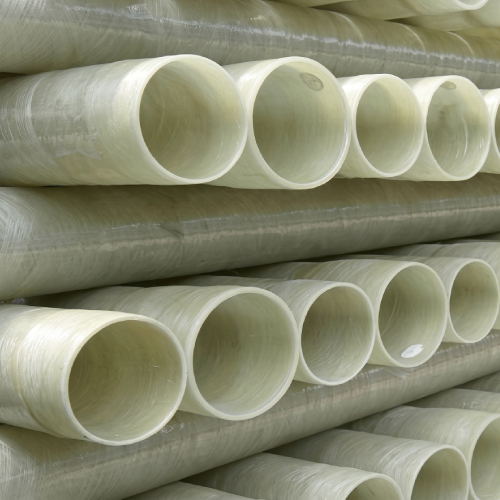
GRE Piping
GRE piping, or Glass Reinforced Epoxy piping, is a type of composite pipe made from a combination of epoxy resin and glass fibers. The glass fibers reinforce the pipe, providing it with strength, while the epoxy resin acts as a binder and offers chemical resistance. GRE pipes are commonly used in industries like oil and gas, chemical processing, marine, and water treatment due to their excellent properties.
Composition
- Fiberglass: Provides structural reinforcement, offering mechanical strength.
- Epoxy Resin: Acts as the matrix or binding material, ensuring chemical resistance and rigidity.
Because of these advantages, GRE piping is often chosen over metal piping, particularly in corrosive environments where metallic pipes would degrade quickly.
In conclusion, GRE piping is widely used for its corrosion resistance, lightweight nature, and durability, especially in harsh environments. However, it must be handled and installed with care to avoid mechanical damage.
| FEATURES | APPLICATIONS |
|---|---|
| Corrosion Resistance | Offshore and onshore oil and gas production (for handling seawater, firewater, etc.) |
| Lightweight | Chemical plants for handling corrosive liquids. |
| High Strength-to-Weight Ratio | Desalination plants. |
| Non-conductive | Water distribution and sewage systems. |
| Longevity | Power plants for cooling systems and other utilities. |